Author Archives: FHC Editor

Urban Halifax stream dormant but not gone

Op Ed for the Chronicle Herald by John DeMont.

Ben Wedge, pictured in Victoria Park, has found a correlation between the presence of flourishing trees and the locations of underground water systems in Halifax. (CHRISTIAN LAFORCE / Staff)

Ben Wedge, pictured in Victoria Park, has found a correlation between the presence of flourishing trees and the locations of underground water systems in Halifax. (CHRISTIAN LAFORCE / Staff)

It occurred like so many great insights have at Charlie’s Club on a Wednesday night, with the smell of hops and the click-click-click of pool balls in the north-end Halifax air.

Ben Wedge, born in Summerside, P.E.I., with a mind that is interested in many things, was nursing a Garrison beer and Googling a map of Halifax on his iPad Continue reading
Jane’s Walk – Freshwater Brook, Halifax Common – Sunday May 3, 11am

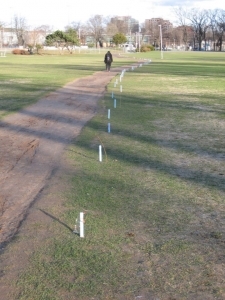
Freshwater Brook as commemorated by Friends of Halifax Common for Earth Day 2011

The path of Freshwater Brook as commemorated by Friends of Halifax Common for Earth Day 2011

Did you know that Halifax has its own lost river system? Join Jane’s Walk guide, Ben Wedge on the North Common to explore Halifax’s river system and its influence on development patterns in a growing garrison town. After centuries of development burying our beautiful urban streams, cities are rediscovering them and starting to bring them back.  Inspired in part by the documentary “Lost Rivers” Halifax Council is debating daylighting Dartmouth’s Sawmill River.  
Here is a nice facebook page and previous posts on Freshwater Brook can be found here…This post about HRM’s 2006 daylighting policy for both Sawmill River and Freshwater Brook.  This post includes links to excellent essays by Matt Neviille and Sam Austin. Continue reading

Cartography of the Commons – Workshops with Zachery Gough

With your help, artist Zachery Gough envisions our Biophysical,Knowledge, Social and Cultural Commons in Halifax.

With you, artist Zachery Gough will envision our Biophysical, Knowledge, Social and Cultural Commons in Halifax.

Cartography of the Commons is a collective mapping initiative and workshop series by artist Zachery Gough to take stock of the things we share in Halifax. We’ll swap info about shared and free resources (Biophysical, Knowledge, Social and Cultural) and talk about how increasingly everything is for sale.
All workshops take place a the Halifax Public Library. Everyone welcome.  Free.

Continue reading

Is Parking for the Common Good?

Letter To The Coast Magazine by Peggy Cameron, Coordinator, Friends of the Halifax Common

Why should parking be convenient? Get on board, support commuter rail at: halifax.ca/transit/commuterrail.php      The Coast Image credit: Jenn Wall, Cunard Street at North Common

Great job describing myriad reasons why metro pedestrians feel they’re the last on the list. I suspect it’s not the sidewalks that have patience maxed out but also the long-term failure of the city to develop an integrated transportation policy. Decades of widening streets to improve capacity and speed of vehicles (more recently it’s a roundabout fetish) has been to the detriment of meeting real transportation Continue reading

HRM Tender for The Pavilion at The Oval

Survey Preverence for Pavilion Architecture Design 38%- Traditional 25% Modern & Contemporary 18% Fun & Vibrant 12%Contextual and Low Key

Survey Preference for Pavilion Architecture Design
38% Traditional
25% Modern & Contemporary
18% Fun & Vibrant
12% Contextual and Low Key

The Halifax Examiner reports: after much delay, the city is offering the tender for construction of the pavilion at The Oval. Back in 2012, the city issued a request for proposals for design of both the plaza and the accompanying building, but with the sense that things were going too fast for design of a building, that tender was cancelled*. Since then, the plaza has been built and named after a beer company that paid pennies on the dollars of the construction price, and the city went into super consultation-with-citizens mode for design of the building. Here are some pretty pictures of what is said to be the final Continue reading

Effective Lighting & Public Safety on the Common

Letter To The Coast Magazine by Peggy Cameron, Coordinator, Friends of the Halifax Common

Lumieres law-the further the light is from the source the lower the intensity.  Multiple stadium lights without cut-offs installed on too-tall poles at The Oval are a glaring example of ineffective and inefficient lighting design.

Lumieres law-the further the light is from the source the lower the intensity. Multiple stadium lights without cut-offs installed on too-tall poles at The Oval are a glaring example of ineffective and inefficient lighting design.

Glare And Present Danger – Letter to the Editor, January 15, 2015.  Although we can feel vulnerable walking alone at night, there no evidence that bright lights reduce crime. (Streetlight scarcity casts risky shadows,” feature by Ameya Charnalie and Sergio Gonzalez, How to fix the city issue January 8).
That’s not to say Halifax doesn’t have lots of problems with  lighting. There is a public safety issue when people need to be able to Continue reading

The Common Streetscape vs Towers, Wind & Shadows

Why is another Halifax neighbourhood up for grabs?
Chronicle Herald Op Ed, Jan. 14, 2015
by Andrea Arbic, Peggy Cameron, Kathy Moggridge, Steve Parcell and J. Grant Wanzel

The corner of Quinpool and Robie streets in Halifax: “If the two proposals proceed, we’d get a massive block of towers with more traffic, noise, shadow, wind and a much larger carbon footprint,” say critics. (ERIC WYNNE/Staff)

The corner of Quinpool and Robie streets in Halifax: “If the two proposals proceed, we’d get a massive block of towers with more traffic, noise, shadow, wind and a much larger carbon footprint,” say critics. (ERIC WYNNE/Staff)

HRMʼs Municipal Planning Strategy and Land Use By-law were intended to guide a rational planning process for the city. They were developed through extensive public consultation and approved by our elected representatives on HRM council. By representing citizensʼ shared view of what constitutes “the public good,” these documents should minimize individual negotiations with private interests. Continue reading

Letter to Herald- Will Halifax City Council See The Wisdom of Daylighting River?

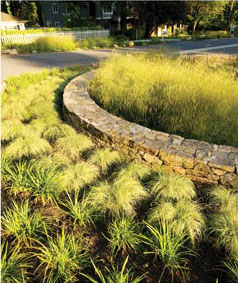
Example of a landscaped raingarden to absorb stormwater and create habitat.

Example of a landscaped raingarden to absorb stormwater and create habitat.

Paul Schneiderheit’s story highlights the benefits of daylighting streams. Jan 6, 2015- Chronicle Herald – Schneiderheit One omission is that HRM’s 2006 daylighting policy specifies two water courses: Dartmouth’s Sawmill River and the Halifax Common’s Freshwater Brook.

We’re generally unaware that the Halifax Common as the watershed for the peninsula was a rich and diverse ecosystem of plants, trees, birds, fish, frogs-all manner of critters and beasties.  Ruth Whitehead Holmes’ The’ Old Man Told Us, Excerpts from Micmac History, 1500-1950 “ recounts histories of Mi’kmaq hunting beaver, Black Duck and moose near Black Duck Pond, later Egg Pond and now the skatepark. Continue reading

Freshwater Brook & Sawmill River

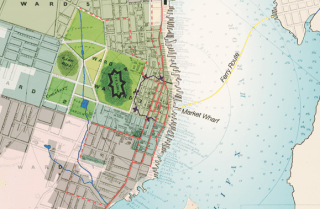
1917 Halifax Map taken from an article by Matthew Neville.  see: https://spacing.ca/atlantic/2010/01/28/representing-halifax-exploring-the-potential-of-the-city-through-mapping/

1917 Halifax Map taken from an article by Matthew Neville. see: https://spacing.ca/atlantic/2010/01/28/representing-halifax-exploring-the-potential-of-the-city-through-mapping/

What do these two watercourses, Freshwater Brook and Sawmill River, have in common you might ask?  Well, for now, they are both underground.

Freshwater Brook drains the Halifax Common watershed into Halifax Harbour and was piped underground around 1878. See Matt Neville’s detailed essay: Representing Halifax, Exploring the Potential of the City through Mapping
and Freshwater Brook Facebook.  Sawmill River was part of the Shubie Canal system and runs between Dartmouth’s Sullivan’s Pond into the Halifax Harbour and was piped underground in the 1970s for flood-control. Continue reading

Letter To The Coast – Roundabouts – Wrong Priority for the Common

total cost estimate $31 million (2011)

total cost estimate $31 million (2011)

Letters to the editor, July 31, 2014, Sidewalk Closed Use Other Side – Julat like spending millions of dollars to widen Robie St. at Cunard or millions to widen Chebucto Road itself, blowing $12.9 million on the North Park roundabouts project is out of sync with a big-picture integrated transportation strategy. The money will do nothing to reduce heavy reliance on cars by improving public transit (buses and trains), land use planning (better ways to access public transportation and active transportation) or moving people in and out of the downtown, not just cars. Continue reading

Trees, Traffic & Roundabouts

FHC isn’t wading into the pro or anti roundabout on North Park Street debate but instead asks…

North Park Street

North Park Street

1. How does this $12.9 million expenditure fit into an integrated transportation strategy* that is about moving people, not just cars into and out of the downtown?  Should the cost $12.9 million be a spending priority when HRM’s 5-year Active Transportation budget is only $42.5  ( ~ $8 million/year); the bikelane budget for the peninsula the next 5 years is only ~$100,000 and there’s no money for supporting auto-ownership-alternatives such as CarShare?
2. Why are these roundabouts being installed in advance of…. Continue reading

Disappearing Green Space, News 95.7 Interview With Rick Howe – 2014/07/07


Banksy says: every day is Park(ing) Day. Photo via BeautifulTrouble.org.

Banksy says: every day is Park(ing) Day. Photo via BeautifulTrouble.org.

Rick Howe discusses the disappearing green space on the Halifax Common with FHC’s Peggy Cameron. We have been losing more than an acre per year and City Counselors show no hurry to protect the remaining green space.