Tag Archives: Willow Tree

Whose Interest is the City Serving?

The Halifax Common and the Parker-Welsford Street neighbourhood continue to be threatened by the proposed 30-storey Armoyen and 25-storey Chedrawe developments. It is disappointing  to have city staff pushing through the development agreement process for projects that are non-conforming to the MPS, the LUB, the Quinpool Road and Area Plan and 1994 Halifax Common Plan (see: PAC Minutes-Jan 25, 2016 ).  The Willow Tree Group‘s serious and credible
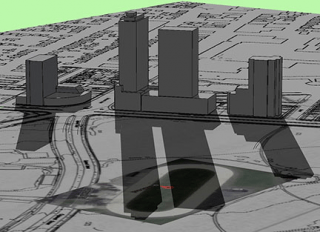
Developers' push for profit and all day darkness on the Oval.

Staff & Developers’ push for private profits, neighbourhood be damned.

work to draw attention to contraventions including height, scale, density, the negative effects on the Halifax Common, existing houses and from traffic, wind and shadow seems ignored.  All for the private interests & profit of exceptionalist developers. The
2013 Stantec Report, the city’s
recent Density Bonusing Study and  Turner Drake’s quarterly reports offer lots of evidence on why  building outside of plan is a bad idea.
Whose interest is the city serving?

“Amendments to an MPS are generally not considered unless it can be shown that circumstances have changed since the document was adopted to the extent that the original land use policy is no longer appropriate. Site-specific MPS amendment requests, in particular, require significant justification to be considered.”


Herald Counterpoint: St. Pat’s Site is Public Property

Published December 11, 2015
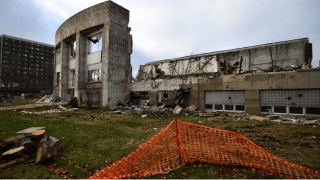
The St. Pat’s High School land belongs to the citizens. Unless citizens decide otherwise, that’s the way it should remain. But city staff, under direction from the Halifax mayor and council continue an invented process to sell off the site.  Why are they so stoked about the sale? They made the decision to sell without asking the owners (you and me). And since then, the process

The state of demolition of the former St. Pat’s High School as of Dec. 4. (INGRID BULMER / Staff)

The state of demolition of the former St. Pat’s High School as of Dec. 4. (INGRID BULMER / Staff)

has been rushed, ill-informed and inadequate.  The single goal is to predetermine the size and number of buildings the purchaser can profitably build. By proposing buildings with greater heights and densities than the existing Regional Municipal Plan, Land Use By-Laws and Quinpool Road Area Plans allow, the city has normalized the understanding that the upcoming Centre Plan will be precluded
Is there a compelling reason to sell off this
centrally located parcel of public land? Not according to a 2013 Stantec report commissioned by HRM.  It determined there’s enough Continue reading

Good News at the Willow Tree – Thank You Bill Mont!

Replacement Tree

Private citizen Bill Mont replaced this Willow Tree, victim of a car crash.

Friends of Halifax Common offer a sincere “Thank You” to Bill Mont for his resolve to plant a new willow tree at the Robie St. & Quinpool Rd.  corner. A midst all the distraction over proposed highrises & a proposed roundabout at the “Willow Tree” corner no notice was given to the Willow Tree having gone missing in action.  On Nov 29, 2014, a 4 am car crash took down the most recent willow tree that Queen Elizabeth II planted years ago. (See Nick Hood’s car crash video & pics of previous willow trees here…)
Continue reading

FHC asks HRM About Armoyen/Chedrawe @ Public Meeting

On September 17, 2016 FHC attended a public meeting about the proposed 29 Storey Armoyen and 25-storey Chedrawe Highrises.  Here are our questions:  1. The Halifax Common was designated as a historic site under the City Charter in 1971.   The 1994 Halifax Common Plan made no mention that high-rises might encircle the Common, as height restrictions were in place at that time; however, it does emphasize the improvement of the Halifax Common and its surroundings. It mentions: special treatment of streetscapes; trees with large canopies; broad views and a sense of openness (rather than the more restrictive notion of view planes); historic houses and places; lands and buildings that are attractive to people at ground level; pedestrian linkages; and safe street crossings. Directions in the Halifax Common Plan were based on extensive public consultations that recognized the need for public open space, views to open space, and green space. These public values remain.

When introducing the site at Robie and Quinpool (on the edge of the Halifax Common), the HRM planners mentioned the Halifax Municipal Plan, the Regional Plan, and the Quinpool Road Commercial Area Plan. Why was there no mention of the 1994 Halifax Common Plan? Like the other plans, it was adopted by the City of Halifax as a policy document. How does the city intend to respect the 1994 Halifax Common Plan and prepare a master landscape design for the Halifax Common when large, inappropriate developments are being proposed one at a time around the edge of the Common? Approving these developments now would diminish future options in carrying out a master plan for the Halifax Common and would preclude proper discussion for a future Centre Plan.

  1. The Robie-Quinpool area already has very strong winds caused by the existing towers. Why has the developer not provided any results of wind studies? Climate change will result in more extreme weather events, so this is a serious omission. The developer’s response that this will be done during the final design phase is not an acceptable answer. Wind studies should be done early in the design process, when height and massing are being considered. To ensure results of the highest possible standard, they should be commissioned independently by the city and paid for by the developer.

  2. To understand the impact of this development on the North Common, we should know how many people use this area. HRM says that 30,000 people use the Oval in a relatively short season (10–12 weeks). Parks Canada estimates that 488,500 people visit Citadel Hill each year but only 155,000 enter Fort George. How many other people participate in organized recreational activities, leisure activities, events, and tournaments on the North Common? How many use it as a walking route? The total is probably several million per year.

  3. How many pedestrians use the sidewalks along Robie Street and Quinpool Road? This area is heavily used and the existing tall buildings already have a negative impact on pedestrians due to wind, shade, and a general aesthetic deficiency at ground level.

  4. The HRM planners stated that this area is changing, citing nearby tall buildings as reasons for considering this development agreement at Robie and Quinpool; however, those buildings either pre-date the current planning regulations or were approved as exceptions through a development agreement process. Accepting them as “precedents” underscores the problem with this current development agreement application, as it would set a precedent for future developments in the area, such as St Pat’s. Why should we have planning regulations and public meetings if developers can set the rules one building at a time?

  5. Cumulative impact is a well-understood concept. What is the city doing to measure and mitigate the cumulative impact of multiple high-rises that are being proposed and built one at a time?