Category Archives: INITIATIVES

Activist initiatives such as encouraging letter-writing. New projects. Protesting.

Herald Opinion – Halifax Common Takes Another Hit

Published June 22, 2015 –
On June 23, 1763, King George III granted 240 acres of common land “to and for the use of the inhabitants of the town of Halifax as Common forever.” Unwittingly, this year the city will commemorate the anniversary by cutting several mature trees to make way for a roundabout at the Cogswell/North Park/Ahern/Trollope intersection.This is a fitting tribute to the ongoing

The proposed developments will block  the common view of the western sky and will increase wind, shadow and traffic.

The proposed developments will block the common view of the western sky and will increase wind, shadow and traffic.

onslaught of the Common, whereby less than 30 acres remain as public open space. And it suits the city’s habit of ignoring the 1994 Halifax Common Plan to protect it by not decreasing the amount of public open space or the amount of city-owned land, and to increase the amount of land under city ownership through recapture of lands.

Examples of giveaways include the lands of the former Queen Elizabeth High School, Grace Maternity Hospital and Civic Hospital, School for the Blind and its adjacent block of Tower Road as well as the side-yards of All Saints Cathedral. Next will be the CBC-TV and the Victoria General Hospital lands. And decisions for the permanent Oval, the Oval building, the roundabouts and several public art projects were all outside of an integrated Halifax Common Master Plan.

Now, after a 21-year wait, this year’s municipal budget included money to begin the planning process. Time is not on the Common’s side. Developers are unjustifiably making extensive use Continue reading

Write to Protect the Halifax Common

This year Halifax will commemorate the June 23rd anniversary of the 240 acre Halifax Common grant from King George III by cutting several mature trees to make way for a roundabout at the Cogswell/NorthPark/Ahern/Trollope intersection.  Its a fitting tribute

View towards Cunard & North Park

View towards Cunard & North Park

to the on-going onslaught of the Common whereby less than 30 acres remain as public open space. And it suits the City’s habit of ignoring the 1994 Halifax Common Plan.

Now after a 21-year wait this year’s municipal budget includes money to begin the planning process. Time is not on the side of the Common.

Developers are unjustifiably making extensive use of the Development Agreement (DA) application process to ignore the Regional Plan’s existing controls that regulate size, mass, height and set back of buildings  for spot-rezoning. Right now there are DA applications for 25-, 28-, 18-, 11-, 24-storey buildings adjacent to the Halifax Common. And an 18-storey building approved next to Camphill Cemetery on Carleton St. and a 30-storey building proposed for Spring Garden Road at Carleton are on Halifax Common land.

By approving DAs for out-of-scale buildings, the Mayor and Council are allowing developers to preclude not just the Halifax Common Master Plan process, but also the Centre Plan and the Halifax Green Network processes. We have yet to ever hear about an Integrated Transportation Strategy and where roundabouts would rank against other priorities such as commuter rail.

Please write the Mayor and Council at clerks@halifax.ca to ask that they stick to the existing rules until new plans are complete. And send comments to the Halifax Green Network https://engage.o2design.com/halifax/engage_map/ asking for regulations to protect the Halifax Common and all public open BLUE space. Continue reading

Is Parking for the Common Good?

Letter To The Coast Magazine by Peggy Cameron, Coordinator, Friends of the Halifax Common

Why should parking be convenient? Get on board, support commuter rail at: halifax.ca/transit/commuterrail.php      The Coast Image credit: Jenn Wall, Cunard Street at North Common

Great job describing myriad reasons why metro pedestrians feel they’re the last on the list. I suspect it’s not the sidewalks that have patience maxed out but also the long-term failure of the city to develop an integrated transportation policy. Decades of widening streets to improve capacity and speed of vehicles (more recently it’s a roundabout fetish) has been to the detriment of meeting real transportation Continue reading

HRM Tender for The Pavilion at The Oval

Survey Preverence for Pavilion Architecture Design 38%- Traditional 25% Modern & Contemporary 18% Fun & Vibrant 12%Contextual and Low Key

Survey Preference for Pavilion Architecture Design
38% Traditional
25% Modern & Contemporary
18% Fun & Vibrant
12% Contextual and Low Key

The Halifax Examiner reports: after much delay, the city is offering the tender for construction of the pavilion at The Oval. Back in 2012, the city issued a request for proposals for design of both the plaza and the accompanying building, but with the sense that things were going too fast for design of a building, that tender was cancelled*. Since then, the plaza has been built and named after a beer company that paid pennies on the dollars of the construction price, and the city went into super consultation-with-citizens mode for design of the building. Here are some pretty pictures of what is said to be the final Continue reading

Effective Lighting & Public Safety on the Common

Letter To The Coast Magazine by Peggy Cameron, Coordinator, Friends of the Halifax Common

Lumieres law-the further the light is from the source the lower the intensity.  Multiple stadium lights without cut-offs installed on too-tall poles at The Oval are a glaring example of ineffective and inefficient lighting design.

Lumieres law-the further the light is from the source the lower the intensity. Multiple stadium lights without cut-offs installed on too-tall poles at The Oval are a glaring example of ineffective and inefficient lighting design.

Glare And Present Danger – Letter to the Editor, January 15, 2015.  Although we can feel vulnerable walking alone at night, there no evidence that bright lights reduce crime. (Streetlight scarcity casts risky shadows,” feature by Ameya Charnalie and Sergio Gonzalez, How to fix the city issue January 8).
That’s not to say Halifax doesn’t have lots of problems with  lighting. There is a public safety issue when people need to be able to Continue reading

The Common Streetscape vs Towers, Wind & Shadows

Why is another Halifax neighbourhood up for grabs?
Chronicle Herald Op Ed, Jan. 14, 2015
by Andrea Arbic, Peggy Cameron, Kathy Moggridge, Steve Parcell and J. Grant Wanzel

The corner of Quinpool and Robie streets in Halifax: “If the two proposals proceed, we’d get a massive block of towers with more traffic, noise, shadow, wind and a much larger carbon footprint,” say critics. (ERIC WYNNE/Staff)

The corner of Quinpool and Robie streets in Halifax: “If the two proposals proceed, we’d get a massive block of towers with more traffic, noise, shadow, wind and a much larger carbon footprint,” say critics. (ERIC WYNNE/Staff)

HRMʼs Municipal Planning Strategy and Land Use By-law were intended to guide a rational planning process for the city. They were developed through extensive public consultation and approved by our elected representatives on HRM council. By representing citizensʼ shared view of what constitutes “the public good,” these documents should minimize individual negotiations with private interests. Continue reading

Letter to Herald- Will Halifax City Council See The Wisdom of Daylighting River?

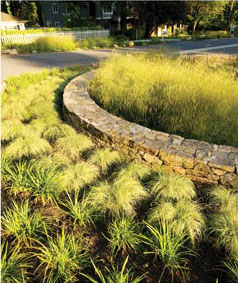
Example of a landscaped raingarden to absorb stormwater and create habitat.

Example of a landscaped raingarden to absorb stormwater and create habitat.

Paul Schneiderheit’s story highlights the benefits of daylighting streams. Jan 6, 2015- Chronicle Herald – Schneiderheit One omission is that HRM’s 2006 daylighting policy specifies two water courses: Dartmouth’s Sawmill River and the Halifax Common’s Freshwater Brook.

We’re generally unaware that the Halifax Common as the watershed for the peninsula was a rich and diverse ecosystem of plants, trees, birds, fish, frogs-all manner of critters and beasties.  Ruth Whitehead Holmes’ The’ Old Man Told Us, Excerpts from Micmac History, 1500-1950 “ recounts histories of Mi’kmaq hunting beaver, Black Duck and moose near Black Duck Pond, later Egg Pond and now the skatepark. Continue reading

More Pavement Slated for the Central Common

FHC has learned the Pavilion parking lot on the Central Common is slated for paving. Soon. The restricted (not public) lot is directly beside the wading pool and the pathway that follows the route of Freshwater Brook through the Central Common. Why is the city’s priority cars and paving the Common instead of landscaping the pathway? Hundreds of walkers and cyclists use the route everyday-why not make it beautiful, add some benches or how about a few tables with roofs?

from https://www.vox.com/xpress/2014/11/18/7236471/cars-pedestrians-roads

“This brilliant illustration shows how much public space we’ve surrendered to cars” is from an article of the same name at https://www.vox.com/xpress/2014/11/18/7236471/cars-pedestrians-roads

Citizens have raised concerns about safety for pedestrians in this area for years. Up to 18 or 20 cars crowd into the lot and until recently drivers would pull out along the public pathway and into the crosswalk on Cogswell Street to exit.

An easy solution would have been to ticket illegal vehicles and lock the gate. Instead, the city unnecessarily replaced the old gate with a new but still unlocked gate, and installed an unattractive chain link fence and a badly designed barrier gate along the pathway that interferes with cyclists and walkers. Cars continue to illegally park at the lot and are still a hazard to pedestrians in the crosswalk.

Soon the vehicles will have an asphalt surface but the waders, walkers and cyclists will only get the run-off.

Want to stop more Halifax Common from being paved? Write the Mayor and Council at clerks@halifax.ca

Blockbuster Highrise Proposed for Quinpool & Robie

Presently there are 2 proposals by 2 developers for 3 block-buster towers of 28, 24 and 12 storeys near the Willow Tree intersection. (For comparison, Fenwick Towers is 32 storeys and Bell Aliant is 22 storeys) These highrises are not permitted under present planning regulations, set a bad precedent and will harm the Halifax Common experience. A public meeting will be scheduled. Please read below to learn what the implications are and how you can be involved.

Block-Busting
When developers apply for special exemptions or changes to smaller parcels of land that ignore an existing master plan and are at odds with a big picture view of what is permitted under existing zoning regulations its known as block-busting or spot-rezoning.

Near the Willow Tree intersection (Quiinpool Road, Robie & Parker Streets), two developers are trying to increase height limits and reduce or eliminate open space and set-back requirements. These are applications for spot-rezoning. The proposed spot-developments are looking for major exceptions to present land-use by-laws that are based on broad and comprehensive public consultation. These existing plans and regulations provide a predictable framework that guides development.

Unfortunately this kind of block-busting creates exactly the sort of controversy that blames Haligonians for being against developers and change. Developer George Armoyan banned from city buildings due to threatening behaviour | The Chronicle Herald

Too bad, because a 2013 Stantec Report, commissioned by the city concluded projected density requirements can met under the existing planning rules.

[expand title=”Read More…” swaptitle=”Hide Rest”]

Effect of Spot-Rezoning on the Halifax Common
The 1994 Halifax Common Plan emphasizes that views, streetscapes and trees are an essential features of the Halifax Common and its perimeter. Spot-developments allowing high-rises will permanently alter the experience of being on the Halifax Common by blocking the view and sky, increasing the shadows and increasing the wind. When you walk home from downtown the western sky at this location will be blocked. People working or living in the private sky-scrapers will be the private owners or our Common view. As well, it sets a precedent for block busting and breaking height restrictions with any future developers who are hoping to re-develop their properties with high-rises anywhere around the perimeter of the Halifax Common.

An on-line public survey by HRM staff about these projects does not offer the option of “no change to allowable height” or “no change to allowable set-backs” but you can write this as you preferred choice in the comment section. The survey is also incorrect about the shadow effect of tall-thin buildings being less than shorter ones.

Some details:
APL Redevelopment: Presently, the corner of Quinpool and Parker Streets has a maximum allowable height of ~ 5 and 14 storeys, north-west of the Willow Tree. The APL re-development proposal wants 12 storeys (3 times the allowable maximum) and 28 storeys (2 times the allowable maximum).

Westwood Redevelopment: The former Cruikshank’s funeral home (2 storeys) and a single family home (2 storeys) at 2032-2050 Robie Street, north-west of the Willow Tree has a maximum allowable height of ~ 4 storeys. The Westwood re-development proposal wants 24 storeys or 6 times the allowable maximum height.

Setbacks: Existing regulations requires that apartments have a set back of 20 or 10 feet to reduce the effect on the neighbouring properties such as solar loss or wind. Both developers are looking for complete exemptions.

In 2013 study HRM commissioned a Stantec report that concluded there is enough existing development potential within the Regional Capital to meet future density targets set out in the Regional Municipal Planning Strategy based on EXISTING height allowances. Changing the rules to favour individual developers isn’t necessary to achieve density and existing neighbourhoods can continue to be protected.

The Halifax City Staff report favours density but ignores the results of its own Stantec Report.

———————————————–

Some Height Comparisons

  • Welsford Apt. – 19 storeys
  • Atlantic Hotel – 16 storeys
  • Quinpool Towers – 12 storeys
  • Aliant Building – 21 storeys
  • Fenwick Towers – 32 storeys
  • APL Proposal – 28 & 12 storeys (allowed now – 4-storey & 16 storey)
  • Westwood Proposal– 24 storeys (allowed now – 4 storey)

Concerned? Write the Mayor and Council directly at: clerks@halifax.ca

[/expand]

Halifax Common vs. Block Buster Highrises

 Presently there are 2 proposals by 2 developers for 3 block-buster towers of 28, 24 and 12 storeys near the Willow Tree intersection. (For comparison, Fenwick Towers is 32 storeys and Bell Aliant is 22 storeys) These highrises are not permitted under present planning regulations, set a bad precedent and will harm the Halifax Common experience.  Please read below to learn what the implications are and how you can be involved.
The proposed developments will block  the common view of the western sky and will increase wind, shadow and traffic.

The proposed developments will block the common view of the western sky and will increase wind, shadow and traffic.

Block-Busting – When developers apply for special exemptions or changes to smaller parcels of land that ignore an existing master plan and are at odds with a big picture view of what is permitted under existing zoning regulations its known as block-busting or spot-rezoning.
Continue reading

Freshwater Brook & Sawmill River

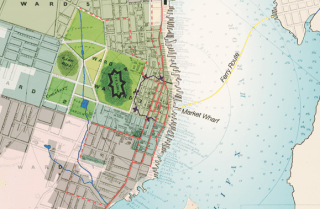
1917 Halifax Map taken from an article by Matthew Neville.  see: https://spacing.ca/atlantic/2010/01/28/representing-halifax-exploring-the-potential-of-the-city-through-mapping/

1917 Halifax Map taken from an article by Matthew Neville. see: https://spacing.ca/atlantic/2010/01/28/representing-halifax-exploring-the-potential-of-the-city-through-mapping/

What do these two watercourses, Freshwater Brook and Sawmill River, have in common you might ask?  Well, for now, they are both underground.

Freshwater Brook drains the Halifax Common watershed into Halifax Harbour and was piped underground around 1878. See Matt Neville’s detailed essay: Representing Halifax, Exploring the Potential of the City through Mapping
and Freshwater Brook Facebook.  Sawmill River was part of the Shubie Canal system and runs between Dartmouth’s Sullivan’s Pond into the Halifax Harbour and was piped underground in the 1970s for flood-control. Continue reading

Catalogue Launch – Celebrate the Common 250

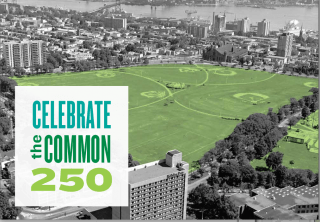
Celebrate the Common 250 2014In October of 2014, Friends of the Halifax Common organized four days of activities to celebrate the 250th Anniversary of the Halifax Common. The Halifax Common came into being when the land was given to the “common folk” of Halifax by King George III “to and for the use of the inhabitants of the Town of Halifax as Common, forever”. To further mark this anniversary we published the Illustrated Catalogue “Celebrate the Common 250”.

Within the 24 pages of this historical documentary book are present-day photographs taken by Alvin Comitor interspersed with archival photographs and images. Accompanying text describes the gradual diminution of the lands allocated to the Halifax Common, south to north, over the past 250 years.

To view the catalogue on line CLICK HERE.

For beautiful print copies Contact Us. A donation of $10 per book is suggested but not required.