Tag Archives: Centre Plan

Rick Howe – Province’s Parkade Unplanned

It’s time to write the Premier- premier@gov.ns.ca. Tell him that the Provincial government’s announcement for a parking garage and steam plant surrounding the Nova Scotia Museum on the Halifax Common needs to be called off -it is unplanned, unnecessary and destructive. Rick Howe’s recent interview with Beverly Miller gives a good overview of the situation:

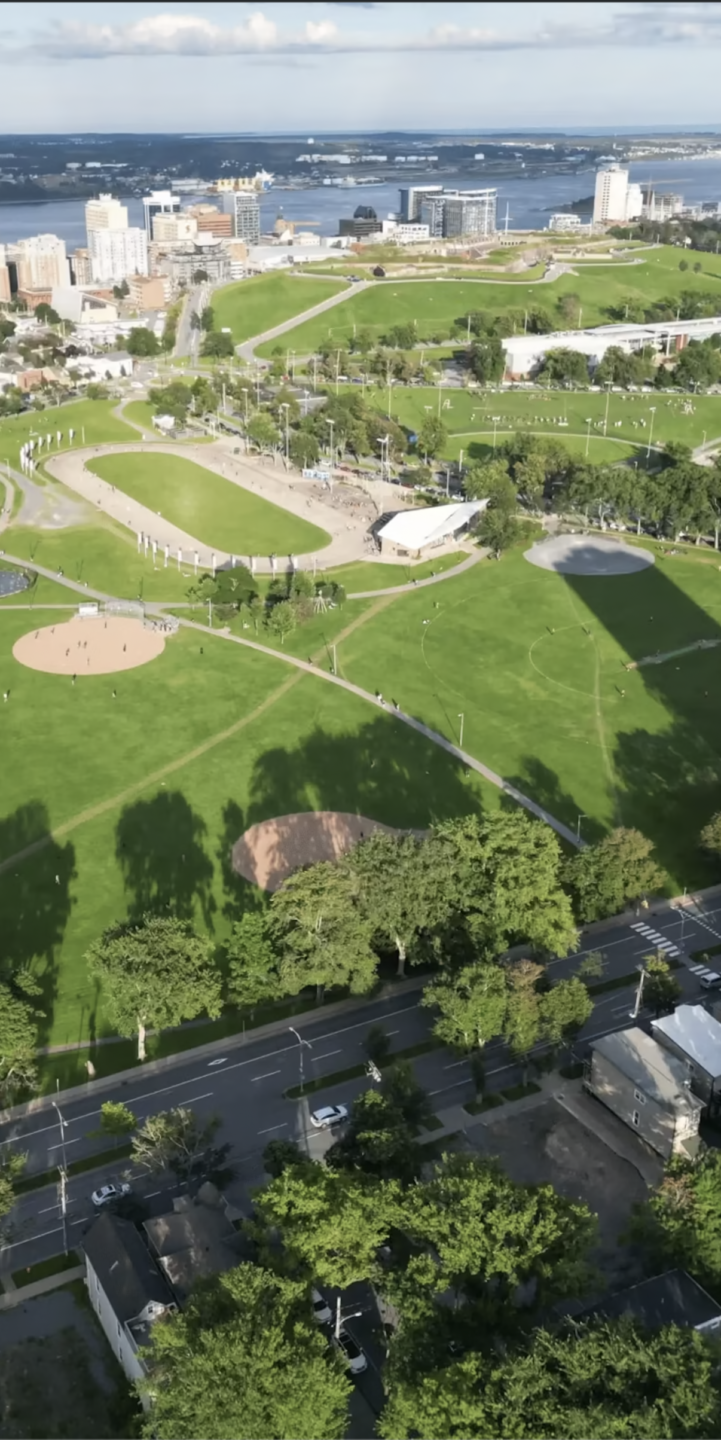
The July 1968 agreement for sale of this parcel of Common land was for a Nova Scotia museum and no other purpose. Neither does this use conform with the 1994 Halifax Common Plan or the 2008 Memorandum of Understanding governing the condition of sale of the former Queen Elizabeth High School lands. Nor were such uses considered as part of the recent Centre Plan or the Masterplan for the Halifax Common. Tell the premier to protect the Halifax Common, not destroy it. Please copy your email to Mayor Savage (mayor@halifax.ca), your Councillor and your MLA.

Op Ed – HRM Centre Plan Process Sidelines Citizens

Community engagement has been sparse over the three-year development of the Centre Plan. photo- Ryan Taplin

Chronicle Herald, Reader’s Corner The Centre Plan process began back in 2016. The idea, based on a study commissioned by HRM and done by Stantec, was to add population density on the peninsula and in central Dartmouth to make better use of our civic infrastructure and make it more economical.

Sound good? City council certainly thought so. It established a huge planning infrastructure to begin the process and to redraw the neighbourhoods of central Dartmouth and of the peninsula.

That was almost four years ago, and council is finally expected to send the plan to a vote for approval sometime in September. This will be a mammoth change in the neighbourhood plans for the affected urban areas, and yet very few people seem to have ever heard of it.

What went wrong here? Continue reading

Unanimous Approval of Carlton St Developments New Low In City Governance

This small-scale mixed use block on Spring Garden Rd is part of 12 buildings & 80 – 100 affordable housing & commercial units to be demolished in the historic Carlton St neighbourhood. As building & construction produce ~40% of greenhouse gas emissions UK architects recently set a policy of upgrading existing buildings for extended uses as a more carbon efficient alternative to demolition and new build.

Mayor Savage and Council’s unanimous approval of two proposal for four towers in historic Carlton Street’s neighbourhood is a new low in city governance. Eight hundred+ citizens petitioned against the proposals and a dozen+ speakers at July 15th’s special meeting spoke in opposition. HRM ignored Development Options Halifax’s requests to present a 3-D model showing the neighbourhood with the proposed developments and a better option 9-storey model that would have retained 10 of the 12 buildings now slated for demolition.
Listen to Rick Howe’s interview with Peggy Cameron to learn more about how democratic process and the Centre Plan are seriously off the rails in HRM…


HOWARD EPSTEIN: HRM council is kowtowing to developers

Chronicle Herald, July 8, 2019

This is the council that is making Halifax unlivable.

The main problems are in the unaffordability of housing and congested transportation. Council is not doing its basic job.

Its consideration of the two proposals for the Spring Garden Road/Robie Street/Carlton/College Street block illustrates the problem.

Not that this is the only example. Think of the clutch of 20- to 30-storey skyscrapers council has approved in the last few years. The Willow Tree. Kings Wharf. Various ones on Robie Street and Young Street.

After the first few, one councillor noted that the public had stopped coming to hearings to object. The councillor drew the incorrect conclusion that high-rises have become acceptable to residents. That is not so. We have just come to see that this council is so completely uncritical of development proposals that there is virtually no point in attending, to put better ideas forward.

Council shows no interest in thinking about what is in the best interests of the overall community. Council does show that it is prepared to say “yes, sir, yes, sir” to almost any proposal that the developers put forward.

There is an obvious list of needed priorities that council ought to be attending to before pulling out all the stops to accommodate the dreams of riches that developers have. Affordable housing. Green space. Public transportation. Energy efficiencies. Climate change.

Why does council ignore these essential matters?

Let’s leave aside the contributions to election campaigns.

What council and staff reports suggest is that this is what’s driving their decisions: demand for housing, construction jobs, more taxes, and no municipal risk (meaning, if developers want to build it, why not let them?).

Each of these is erroneous thinking.

* There is demand for housing. The issue is form and affordability. All demand for housing for the foreseeable future in HRM is already met by pre-existing approved lots (2013 Stantec study, ‘Quantifying the Costs and Benefits of Alternative Growth Scenarios’, @ Table 3.6, available online). If something different is needed, it could be through low-rise buildings compatible with existing neighbourhoods.

* Construction jobs can be achieved through alternative styles of housing. Renovations and infill generate jobs.

* More taxation is not at all guaranteed. Commercial space in the central business district has been overbuilt. That is why there is a 20 per cent vacancy rate. And why owners have asked for a lower tax rate, which shifts tax burden to the residential homeowner, since HRM expenditures will not go down.

* Risk is actually present. Not for HRM as a government, but for all of us who own houses and businesses, and who try to live here. Wind from skyscrapers make walking unpleasant, and in the steep downtown streets, dangerous. Shadows make for unpleasant canyons without sunlight, and ruin solar energy options. The housing is not affordable. The housing is not aimed at families with children. To the limited extent it is, where are the new neighbourhood parks and playgrounds for the families?

It is well-documented that there are overall environmental benefits from maintaining and renovating existing buildings compared to new construction (K. Rosenfield, The Greenest Building, 2012).

I understand the push for densification of the Halifax peninsula and central Dartmouth. Major employers, services and attractions are here (universities, hospitals, the port, the navy, government offices, the shipyard, restaurants, bars, entertainment, etc.). People want to live reasonably handy to work if at all possible. Commuting is time-consuming, expensive and irritating.

But, again, the affordability and style of housing is key. Densification can be achieved at a much lower height by looking at how we can build neighbourhoods that are pleasant, livable, and affordable. The communal effort that gave us the Hydrostone, and the maintenance of Schmidtville, are our precedents.

Council is now engaged in rushing through lots of proposals before the Centre Plan comes into effect. But the draft Centre Plan itself has many major flaws.

What is driving the Centre Plan is not innovative ways to strengthen our community. It is the fact that the developers in our midst have bought up various blocks, and the locations they own are the sites the Centre Plan is designating for high-rises.

This is not a council that is planning for the overall benefit of the community. This is a council that has fallen in love with one segment of the community. Definitely time for a change.

Howard Epstein is a former HRM councillor and MLA. He lives in Halifax.

Citizens See 3-D model – but HRM won’t look!

Development Option Halifax’s 3-D model of 2 Carlton Street proposals shows them together together for the first time.  This cheap and available technology helps understand the scale, perspective and placement. Unfortunately HRM’s Heritage Advisory Committee ignored requests to present the 3-D model to aid them in their approval process. Listen to Sheldon MacLeod’s interview with Peggy Cameron to learn why we need 3-D models for all developments and for proposed changes under the Centre Plan.

Vancouver requires 3-D models for all proposed developments.

Public hearing – “Pizza with the Works” to be Served

At 6pm, Tuesday May 21, at a Public Hearing at City Hall Mayor and Council will decide what their appetite is for a proposed 8-storey + penthouse building at the corner of Robie, Cunard and Compton Streets. Changing the existing height restriction of 35-40’ along the western edge of Robie Street to permit the development will drastically alter the character streetscape that citizens view from and near the Halifax’s North Common.

An 8-storey + penthouse "Pizza with the works" development will go to public hearing on Tuesday May 21, 6pm. 6 to 8 historic buildings on the western edge of the North Common will be demolished.

An 8-storey + penthouse “Pizza with the works” development will go to public hearing on Tuesday May 21, 6pm. 6 to 8 historic buildings on the western edge of the North Common will be demolished.

The multi-coloured, multi-facaded building is like an over-sized pizza with the works but so far, feedback from about 80 citizens at two Public consultations confirming this has been largely ignored,” said Peggy Cameron, Friends of Halifax Common co-chair. “It’s troubling that while cities around the world are recognizing the importance of distinctive, historic buildings as critical for economic, social, cultural and environmental reasons, Halifax would even consider changing the rules to tear down another 6-8 character buildings* and continue our conversion into an any-where, any-city streetscape.

Citizen’s group Development Options Halifax is calling for 3-D models of all developments being considered now and under the proposed Centre Plan before its approval. “3-D models show details that otherwise are being missed,” says the group’s Larry Haiven. “In this case we could better understand what the result will be if city changes the exiting height restriction to permit this massive building on the western edge of the Halifax Common, what the effect on the neighbourhood is or how adding 75 cars impacts Compton Street and the nearby busy intersection at Robie,” said the retired Saint Mary’s business professor.

Two properties adjacent to the proposal on Cunard were recently bought and renovated into attractive, multi-unit buildings that are-in-keeping with the character of the neighbourhood. Studies prove that older, smaller, neighbourhoods are more sought after for successful destinations.

Neighbourhood restaurants like Jane’s on the Common (now re-located to Gottingen Street), Studio 21, Elliot & Vine, Robie Street Station, El Chino Snack Bar and Tony’s are examples of what makes this part of the city interesting. The new offering gives nothing to the community while proposing huge advantages to the developer.

*Some of the multi-unit historic buildings to be demolished are:

2162 and 2164 Robie (at Compton)


2166 Robie Street

2176 Robie Street


2178 Robie and 2182 Robie (at Cunard)

Dear Centre Plan, Show us your 3-D models!

Dalhousie architecture student Hadrian Laing volunteered to produce this 3-D model of 4 towers proposed for historic the Carlton St. neighbourhood- together & for the first time!

FHC has joined other citizens to form Development Options Halifax. Recently the public saw our 3-D print model of 4 towers that 2 developers want to build at Carleton, College, Spring Garden and Robie. This technology is readily available, effective and  cheap but it’s the first time it’s been used to model developments for Halifax citizens. 

In January we developed and showed the public drawings of the two proposals together, again for the first timeeven though they’re on the same block HRM processes and meetings have been entirely separate! The model is so successful we call on HRM to provide 3-D print models of all proposed developments and Centre Plan changes in advance of its approval. The public has the right to know what HRM plans for the city. This “to scale” model captures how out-of-scale the proposals, at 80% the square footage of the convention centre, are. It allows a comparison of before and after, and helps explore better options for in-fill respectful of Halifax Common’s last historic neighbourhood.

HRM planning needs a more open, transparent process. During June 2016 Centre Plan public consultations, HRM Staff story-boards suggested their target of addition 400 residents to the area could be accommodated in two 10-storey buildings or one 10-storey building and two 5-storey buildings. But Staff didn’t include the already approved 18-storey high-rise that Killam will build on Carlton by Camp Hill Cemetery – it would house 70% of the 400 residents!

There are so many unanswered questions. How is it volunteers are showing the mass and scale of these developments together to the public for the first time? And presenting the first 3-D model? Why are the 2012 and 2016 requests by Heritage Trust for the last historic neighbourhood on the Halifax Common to be designated as a conservation area being ignored? Almost 50% of the buildings are heritage and another 11 qualify. Why is HRM planning for the wasteful destruction of up to 12 buildings? Its a small-scale, mixed-use, commercial and residential neighborhood with many affordable units and hidden density.

There are better options. The 3-D model helped us visualize and calculate that 8-storey buildings could be constructed in the 48,000 sq ft of parking area in the centre of the block. These could accommodate approximately 213  two-bedroom units or ~534 people. Similarly a low-rise building could be built at Killam’s property at 5880 Spring Garden Road next to the Glitter Bean. The towers are not necessary.

Please ask the Mayor and Council to not approve these 2 developments. Sign the petition: https://forms.gle/3enTs6PfSkmMmNW48


Planning A Carlton Street Super Block Isn’t Urgent – It’s Premature, Piecemeal and Peculiar.

Why exactly are Mayor Savage and HRM Council following the lead of the Lawen/Dexel and Rouvalis developers who want to break rules and jump ahead of HRM’s planning process to build 16, 20, 26 and 30-storey towers on the Carlton Street block of the Halifax Common? Listen to Rick Howe’s interview with FHC director Howard Epstein about his letter to Mayor and Council to hear some of the many reasons why the proposed super blockers should be deferred or defeated.

Read the letter here: FHC Director Howard Epstein’s letter of Jan 28th to Mayor and Council re: Carlton Street


Want to help out? Scroll down to find a poster and 2-sided flyer you can print and distribute.

    Print and post this poster in your neighbourhood and workplace.

Download and print a 8.5 x 11 two-sided handbill.

There are four handbills per printed sheet.


Time to care for Canada’s oldest, besieged Common – Chronicle Herald Op Ed

Rick Howe Interview – Council Caves on Willow Tree Tower

HRM Council approved 25 storeys at Quinpool /Robie.

In June HRM Council ignored public opinion and staff advice to vote 10 to 6 in favour of George Armoyen’s 25-storey tower at Robie and Quinpool. The building will degrade the neighbourhood and the Halifax Common. And the decision assures an elite class of developers that democratically derived rules don’t matter to Council. Hear a quick review…

FHC’s Presentation to Council at Willow Tree Public Hearing

Present rules restrict Armco’s 11-storey building at Robie and Quinpool to its present size to protect the Halifax Common and its neighbourhood.

June 19, 2018

Dear Mayor and Council,

Friends of Halifax Common oppose this proposed 25-storey tower. Further we believe this project is the wrong focus for HRM staff, Council and the public at this time.

FHC has closely followed or participated in the ~ 20 “events” that have led to today’s extra public hearing. These included public information meetings, Peninsula Advisory Committee meetings, a survey, HRM staff reports and supplementary reports, Community Council and Council of the Whole reviews and votes and scheduled, cancelled and re-scheduled public hearings. FHC’s major review and request for a new comprehensive staff report submitted in May 2017 has been ignored.

This project’s consumption of HRM staff and Mayor and council resources paid for by the public tax dollar has all been to ensure that the desired profit of an unsolicited project owned by a single developer can be met and has proceeded without disclosure of any business case or financial evidence.

The proposed tower should not be considered for many reasons.

  • It breaks 10 Halifax Peninsula Land Use By-laws under the Municipal Planning Strategy and could not be built under the draft Centre Plan.
  • HRM staff have recommended against this height-they are your professionals.
  • The majority of the public oppose the building and its not just a small vocal minority as asserted by the developer. An independent CRA poll found that over half of those polled supported 16 storeys or less and only 10% supported 25-storeys.
  • Densification can happen but this project is not needed- Grant Wanzel and Steve Parcell, professors from Dalhousie’s School of architecture as members of the Willow Tree Group found that ~3000 residents could be added to the Quinpool Road area with in-fill and buildings of between 4-6 storeys. And under the Regional Plan 125 persons/acre can be accommodated in a 3-storey building or in 3 storeys of residential on a commercial base in the Quinpool Corridor.
  • And finally other buildings can be and are being built without controversy because they conform to existing planning rules- a recent example is the 11-storey commercial and apartment building constructed by Ross Cantwell on Gottingen St., built as of right.

Ad hoc decision making that gives preferential treatment to individual developers instead of balancing it with the public interest is not the way to plan for the future of our city.

In 1994 the City of Halifax adopted the Halifax Common Plan which was the outcome of a public consultation process stemming from citizen frustration over ad hoc decisions It committed the city to develop a masterplan for the 235 acre Halifax Common in conjunction with overall planning of the city. The long term management plan was to encompass a vision that ensured protection of the Halifax Common and the recapture and the retention of Halifax Common land. Buildings that were meant to return to the Halifax Common included the CBC TV, the QEHS, the Grace Maternity,

It is a problem that HRM is making this decision about this individual developer’s 25-storey project without first following through on its commitment made with the 1994 Halifax Common plan – that is to complete the master plan and to do it within the context of planning for the city. This building and other proposed high rises under the draft Centre Plan and several individual Development Agreement processes in the works will have a huge and negative impact on the Halifax Common with increased wind, traffic, blocking the western sky and in this case a permanent shadow on afternoon skates on the Oval.

Wouldn’t it be amazing if staff resources and council time was focused on planning for our city? What if the priority was not that the owner of APL meets his desired profit but to complete the master plan for the Halifax Common and the draft Centre Plan?

Thank you,

Peggy Cameron
Co-chair, Friends of Halifax Common

“It Is Our City!” – FHC Comments on The Centre Plan

FHC supports the principles of the Centre Plan but believe it needs a better balance of proper densification and environmental care. Below are recent suggestions and concerns  that we submitted. There are four distinct themes that build on previous asks such as growth scenarios that include commuter rail and 3-D models of what the Centre Plan will permit.

Themes:
Protecting Halifax’s existing character – urban form, streetscapes & neighbourhoods – best economic, environmental, social and cultural advantage;
Protecting the Halifax Common and its neighbourhoods – increase green space, parks, playgrounds & green walking/biking networks; 
Balancing density between Halifax & Dartmouth and distributing density on the Peninsula;
Climate Change – set targets for GHG reductions, Stop needless demolitions, Protect Solar Access.

Details…

1.  Protect Halifax’s existing character and urban form:
 
There is a serious need within the Centre Plan for better protection of the existing urban form, neighbourhoods and character of the city. That is what attracts tourists, residents and students (30,000+) to the city. The Centre Plan’s increase in height and massing limits to allow greater densities will contribute to rapid transformation and homogenization, and inflated land value and property tax. Under the Centre Plan hundreds of low-rise, mixed-use Victorian and Georgian character buildings with moderate-rent apartments and commercial spaces will be able to be demolished for development. Replacing the streetscapes designated as corridors etc. with 6-storey buildings and fewer trees will be a drastic change for the look, living and walkability of Halifax.

Continue reading